
Cashify started with a simple problem: what happens to old electronics after people stop using them?
In India, millions of smartphones, laptops and other electronic devices sit unused in homes because consumers often do not have a trusted, convenient way to sell them.
Cashify built a business around solving that problem.
What began as ReGlobe in 2009, a waste-management consultancy, eventually evolved into Cashify, an omnichannel re-commerce platform that allows consumers to sell old devices, buy refurbished electronics, repair devices and recycle used gadgets.
Today, Cashify has grown into a ₹1,100+ crore annual-revenue business, with 200+ physical stores and a large digital platform serving customers across India.
Key Highlights
Founded originally as ReGlobe in 2009.
Cashify was launched in 2013.
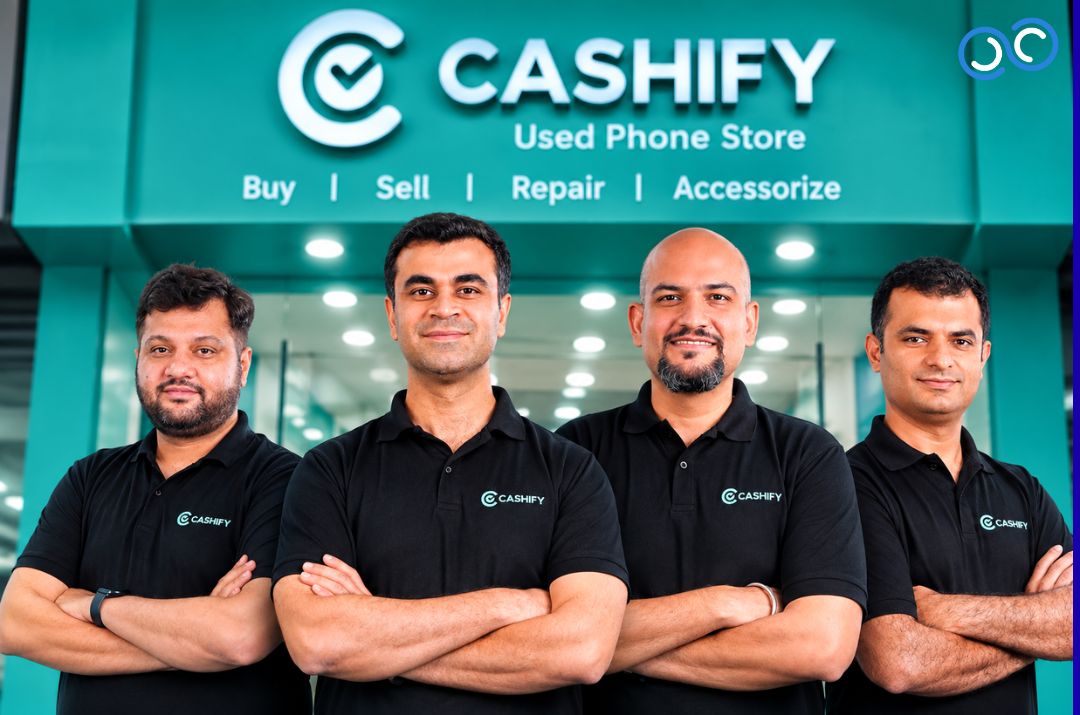
Founders include Mandeep Manocha, Nakul Kumar, Amit Sethi and Siddhant Dhingra.
Built around buying, selling, repairing, refurbishing and recycling electronics.
Raised approximately $140 million in publicly announced funding through its Series E round.
FY25 operating revenue reached approximately ₹1,095.9 crore.
FY25 total revenue was approximately ₹1,120+ crore.
Net loss narrowed by around 80% to ₹10.6 crore in FY25.
Built 200+ physical stores across 70+ cities according to Cashify's official platform.
Uses doorstep pickup, instant payment, diagnostics and refurbishment to build consumer trust.
Works with major smartphone brands on buyback and exchange programmes.
How Cashify Started
The story of Cashify begins with ReGlobe, a waste-management consultancy started in 2009.
The founders initially worked on helping businesses manage waste and reuse materials.
ReGlobe worked with companies and organizations on recycling and disposal-related problems, including clients such as Nokia and Indian Railways.
But the founders eventually noticed a much bigger consumer problem.
Old electronics were becoming increasingly common.
And smartphones were especially interesting.
People wanted to upgrade their phones, but the process of selling an old device was often inconvenient, uncertain and dependent on local dealers.
The founders saw an opportunity to create a more organized market.
That became the foundation for Cashify.
Who Founded Cashify?
Cashify's founding team includes four entrepreneurs
Mandeep Manocha
Mandeep Manocha is Co-Founder and CEO of Cashify.
He came from a background that gave him early exposure to recycling and waste management before moving into entrepreneurship.
Today, he leads the company's overall business strategy and operations.
Nakul Kumar
Nakul Kumar is Co-Founder and Chief Marketing Officer.
He was part of the founding journey from ReGlobe to Cashify and played an important role in developing the company's consumer-facing brand and re-commerce model.
Amit Sethi
Amit Sethi is a Co-Founder who brought technology and product expertise to the company.
His technical background helped Cashify build a technology-driven system around device valuation, diagnostics and re-commerce.
Siddhant Dhingra
Siddhant Dhingra is a Co-Founder and Chief Business Officer, Global Markets.
He has been part of the company's expansion and business development journey.
The Problem Cashify Identified
The traditional used-electronics market had three major problems
Low Trust
Consumers were often uncertain about whether they were receiving a fair price.
Unorganized Pricing
Different dealers could offer significantly different prices for the same device.
Convenience
Selling an old phone often required visiting a local shop and negotiating with a buyer.
Cashify attempted to solve these problems through a standardized digital experience.
A customer could enter their device details, receive an estimated price, schedule a pickup and receive payment.
The process made selling an old phone closer to an organized e-commerce transaction.
From Marketplace to Full-Stack Re-Commerce
This was one of the most important strategic shifts in Cashify's journey.
Initially, the company focused primarily on helping consumers sell used devices.
But Cashify gradually expanded into a full-stack re-commerce model.
Instead of simply connecting buyers and sellers, it began controlling more parts of the value chain.
The company buys devices.
Then it can inspect and diagnose them.
Devices suitable for resale can be refurbished.
Refurbished devices are sold to consumers.
Other devices can be directed toward repair or recycling.
This creates a circular ecosystem
Buy → Diagnose → Repair → Refurbish → Sell → Reuse → Recycle
Cashify itself describes its model around buying, repairing, selling, refurbishing and reusing technology.
Cashify's Business Model
Cashify today operates across multiple connected businesses.
Selling Used Devices
Consumers can sell old smartphones, laptops, tablets, gaming consoles and other electronics through Cashify.
The company offers doorstep pickup as well as offline-store options.
Refurbished Electronics
Cashify purchases used devices, evaluates them and refurbishes suitable products before selling them again.
This allows the company to participate on both sides of the transaction.
It does not only acquire old devices.
It also creates another revenue opportunity by selling refurbished devices.
Device Repairs
Cashify also provides repair services for smartphones and other electronics.
This gives the company another touchpoint with customers and creates an additional revenue stream.
Recycling
Devices that cannot be economically refurbished can enter recycling channels.
This completes the circular-economy model.
Cashify's Growth
Cashify has expanded far beyond its original online model.
The company now operates 200+ experience centres, while its website also states that its services reach more than 1,500 cities in India.
Its physical stores serve several purposes.
They provide customers with a place to
Sell old devices
Buy refurbished electronics
Repair devices
Exchange smartphones
Physically inspect products
This offline presence is particularly valuable in a category where trust remains a major barrier.
Cashify's Funding Journey
Cashify has attracted significant institutional investment over the years.
Its investors have included
Prosus
NewQuest Capital Partners
Bessemer Venture Partners
Blume Ventures
Olympus Capital Asia
Amazon
Paramark Ventures
In June 2022, Cashify raised $90 million in Series E funding, led by NewQuest Capital Partners and Prosus, with participation from existing investors and Paramark Ventures.
Cashify stated that the Series E round took its total investment raised to approximately $140 million at that point.
The company planned to use the capital to expand its refurbishment infrastructure, marketing and offline presence.
Cashify's Revenue
Cashify has reached significant financial scale.
According to FY25 financial data reported by Inc42, Cashify's operating revenue increased from ₹935.1 crore in FY24 to ₹1,095.9 crore in FY25, representing approximately 17% growth.
Its total revenue, including other income, was approximately ₹1,120+ crore in FY25.
The company also made significant progress on profitability.
Its net loss declined from approximately ₹53.2 crore in FY24 to ₹10.6 crore in FY25, an improvement of roughly 80%.
This is an important milestone because Cashify operates a relatively complex, inventory-heavy business.
Where Does Cashify Make Money?
Cashify has multiple revenue streams.
Refurbished Device Sales
Cashify buys used electronics, refurbishes suitable devices and sells them to consumers.
Repair Services
The company generates revenue from repairing used devices and providing related services.
Buyback & Exchange
Cashify also works with major electronics brands and retailers on device buyback and exchange programmes.
Its official history lists partnerships involving brands including Apple, Amazon, Samsung, OnePlus and others.
Retail
Its physical stores provide another channel for buying, selling and repairing electronics.
This creates a diversified revenue model rather than relying exclusively on one transaction type.
The Biggest Challenge: Trust
Selling an old phone is not the same as selling a normal consumer product.
A customer may worry
"Am I getting a fair price?"
A buyer of a refurbished phone may ask
"Will this device actually work properly?"
And someone selling an old phone may have another concern
"What happens to my personal data?"
Cashify has therefore invested heavily in creating trust mechanisms around the transaction.
These include standardized diagnostics, device grading, data sanitization, warranties and physical stores.
Data Privacy as a Competitive Advantage
One of the biggest concerns when selling an old smartphone is personal data.
Phones contain
Photos
Messages
Contacts
Banking information
Passwords
Documents
Personal accounts
Cashify has built data-sanitization processes into its refurbishment operation.
Its current certification information includes logical data sanitization within its R2v3 certification scope for used laptops.
This turns something that could have been a consumer fear into a potential trust advantage.
The Refurbishment Trust Problem
The second major challenge is convincing customers to buy used technology.
Consumers may worry about
Battery health
Screen quality
Hidden defects
Previous usage
Device authenticity
Warranty
Return policy
Cashify addresses this through standardized quality checks, grading and warranty mechanisms.
Its current refurbishment materials highlight 32-point quality checks, device grading, warranty and return protection.
The goal is simple
Make a refurbished device feel less like a second-hand purchase and more like a reliable product.
Why Cashify Built Physical Stores
At first glance, physical stores may seem unnecessary for an online re-commerce company.
But they solve an important problem
Trust.
A customer can walk into a store.
They can see the device.
They can speak to a representative.
They can sell their old phone.
They can get a repair.
They can buy a refurbished device.
Cashify currently highlights 200+ experience centres across India.
The physical network therefore complements the digital platform rather than replacing it.
Cashify's Omnichannel Advantage
This creates one of Cashify's strongest competitive advantages.
A pure online marketplace mainly competes on
Price + Convenience
Cashify can compete on
Price + Convenience + Physical Trust + Service
The customer can discover the product online but still have an offline touchpoint.
That is particularly useful in a category involving expensive electronics.
Cashify's Full-Stack Moat
Cashify's business is difficult to replicate because it operates across multiple layers.
1. Device Acquisition
It needs to continuously acquire used electronics.
2. Valuation
It needs to determine what those devices are worth.
3. Logistics
It needs to collect devices efficiently.
4. Diagnostics
It needs to determine device condition.
5. Refurbishment
It needs to restore suitable devices.
6. Distribution
It needs to sell refurbished products.
7. Repair
It can monetize devices through repair services.
8. Recycling
It needs responsible downstream processing for devices that cannot be reused.
The more transactions Cashify processes, the more operational knowledge it can potentially accumulate across this entire chain.
The Circular Economy Opportunity
Cashify is also part of a larger shift toward the circular economy.
Traditional electronics follow a relatively simple path
Manufacture → Buy → Use → Discard
Re-commerce changes the model
Manufacture → Buy → Use → Sell → Refurbish → Reuse → Recycle
This keeps products and materials in circulation for longer.
Cashify's stated mission is centered around changing the lifecycle of gadgets and making refurbished technology better for both consumers and the planet.
The Struggles Cashify Had to Overcome
Cashify did not build this market in an environment of perfect consumer trust.
The founders had to deal with
An unorganized second-hand market
Unpredictable device pricing
Consumer concerns around refurbished electronics
Working-capital requirements
Inventory risk
Logistics complexity
The cost of building refurbishment infrastructure
Competition from local dealers and other online platforms
The company also had to educate consumers about the idea that an old smartphone still has economic value.
That was a major behavioural challenge.
The Strategic Shift That Changed Cashify
One of the biggest lessons from Cashify's journey is that the company did not remain a simple marketplace.
It moved toward controlling the transaction.
This shift gave Cashify more responsibility.
But it also gave the company more control over
Quality + Pricing + Customer Experience + Inventory + Refurbishment
That can create a stronger business model than simply taking a commission for facilitating transactions.
Cashify's Competitive Advantage
Cashify's strongest advantage can be summarized in four words
Trust, Technology, Operations and Distribution.
Trust
A recognized brand reduces consumer hesitation around buying and selling used devices.
Technology
Digital valuation, diagnostics and data systems help standardize the experience.
Operations
Refurbishment and repair capabilities create control over product quality.
Distribution
A combination of online channels and 200+ physical stores creates broad customer access.
Together, these capabilities create a difficult-to-copy operating system for re-commerce.
What Founders Can Learn From Cashify
Start With a Real Market Problem
Cashify did not start by trying to build a large technology company.
It started with waste and the problem of unused electronics.
Lesson
Find a painful market inefficiency before building the product.
Follow the Better Opportunity
The founders originally worked in broader waste management.
They eventually identified that consumer electronics offered a more attractive opportunity.
Lesson
Your first business idea does not always have to become your final business model.
Build Trust Into the Product
Cashify operates in a market where trust directly affects conversion.
Lesson
If your business involves used products, financial transactions or personal data, trust cannot be an afterthought.
Trust must be part of the product.
Control the Value Chain When It Matters
Cashify moved from a marketplace approach toward a full-stack operating model.
Lesson
If quality and customer experience are critical, controlling more of the value chain can become a competitive advantage.
Combine Online Convenience With Offline Trust
The company did not choose between digital and physical retail.
It built both.
Lesson
In markets where consumers still want physical reassurance, an omnichannel model can be more powerful than a digital-only strategy.
The Bigger Opportunity Behind Cashify
Cashify is not simply selling used phones.
It is helping create an organized market for products that were previously treated as unwanted or difficult to sell.
That changes the economics of electronics.
A smartphone that sits unused in a drawer has almost no value to its owner.
Once it enters an organized re-commerce system, it can become
Cash for the seller → Affordable technology for the buyer → Revenue for the refurbisher → Less waste for the environment
That is the larger opportunity.
Cashify's Journey in Numbers
2009 — ReGlobe was founded.
2013 — ReGlobe transformed into Cashify.
$140M+ — Total investment raised through the Series E period.
₹1,095.9 Cr — FY25 operating revenue.
₹1,120+ Cr — FY25 total revenue.
₹10.6 Cr — FY25 net loss, down roughly 80% year-on-year.
200+ — Experience centres highlighted by Cashify.
1,500+ — Cities Cashify says it serves across India.
These numbers show how a problem that began with waste management evolved into a large-scale technology and re-commerce business.
Summary Takeaway
💡 **Key Takeaway:
- Cashify's biggest lesson is that a fragmented offline market can become a large technology business when you solve the three things consumers care about most: trust, convenience and value.
What started as ReGlobe in 2009 eventually became Cashify, an organized re-commerce ecosystem covering buyback, refurbishment, repairs, retail and recycling.
The company did not simply create a marketplace for used phones.
It built infrastructure around the entire lifecycle of a device.
From waste management to re-commerce.
From one online transaction to a full-stack ecosystem.
From used electronics to a ₹1,100+ crore business.
Cashify's journey shows that sometimes the biggest startup opportunity is not creating something completely new.
It is organizing a market that already exists but still doesn't work well.

.jpg)
.jpg)