
.jpg)

Finding the right founder is one of the most important parts of early-stage investing. While investors often evaluate market size, product, traction and financials, Karthik Reddy of Blume Ventures looks beyond the obvious.
His approach focuses on qualities such as hunger, curiosity, resilience, self-awareness, storytelling and the ability to evolve as a company grows.
Karthik Reddy is the Co-founder and Managing Partner at Blume Ventures. Blume's portfolio includes startups across sectors such as robotics, AI, fintech, manufacturing, SaaS and consumer technology. Its portfolio includes companies such as Niqo Robotics, Cashify, Atomicwork, Exotel and Leverage Edu.
Key Highlights
Hunger can matter more than prestigious credentials.
Investors look for founders willing to solve difficult and non-obvious problems.
Self-awareness can make founders more trustworthy and coachable.
Persistence matters when founders face rejection and difficult periods.
Storytelling is important for communicating a startup's vision.
Curiosity helps founders evolve as their companies scale.
Founders need to understand their TAM with depth and specificity.
Co-founder conflicts can emerge even when a startup is successful.
Strong leadership requires ownership of the company's vision.
- Hunger Matters More Than Just Credentials
An IIT or IIM degree can be valuable, but Karthik Reddy believes credentials alone do not define a great founder.
He looks for "hunger" — the internal drive to build something meaningful and prove that an ambitious idea can work.
Founders who have experienced struggle may develop a stronger ability to deal with rejection, uncertainty and setbacks.
For an early-stage investor, that determination can sometimes reveal more about a founder than a prestigious résumé.
- Look for Non-Obvious Market Opportunities
Many entrepreneurs follow the trends that are already attracting attention.
Karthik's perspective is different. He sees opportunities in areas such as deep tech and manufacturing, where founders are solving difficult problems that may take years to commercialise.
This can include robotics, EV components, sustainable materials and other technology-intensive industries.
Blume's portfolio includes Niqo Robotics, which develops AI-powered agricultural robots, and Ethereal Machines, which manufactures advanced CNC and 3D-printing machines.
- Self-Awareness Is a Powerful Founder Trait
Startup culture often rewards founders who appear extremely confident.
But Karthik places significant value on self-awareness.
A founder who can acknowledge weaknesses, insecurities and mistakes can be easier to trust and coach.
Being imperfect is not necessarily a weakness. Hiding those imperfections can be.
As a startup grows, founders face greater responsibility and increasingly difficult decisions. Understanding their own limitations can help them build stronger teams and make better decisions.
- Persistence Means Going Beyond the Comfortable
Hard work is important, but simply working long hours does not guarantee success.
For Karthik, persistence means being willing to go far beyond conventional methods when pursuing an important opportunity.
His "airport gate" example illustrates this mindset: if a founder genuinely wants to meet an investor or potential mentor, they need the courage and persistence to create that opportunity rather than simply waiting for an introduction.
The broader lesson is that founders sometimes have to actively create opportunities instead of waiting for them.
- Storytelling Can Be a Fundraising Advantage
Investors do not only evaluate numbers and business plans.
They also need to understand why the problem matters, why the solution is different and why the founder is the right person to build the company.
Karthik considers storytelling an important founder skill because entrepreneurs must convince investors, employees, customers and partners to believe in a vision that may still be years away from becoming reality.
A founder may have a strong business idea, but if they cannot communicate that idea clearly and convincingly, building support around it becomes much harder.
- Be Inquisitive and Keep Evolving
A founder who can successfully run a seed-stage company may not automatically be ready to run a much larger organisation.
As the company scales, leadership requirements change.
This is why curiosity and continuous learning matter.
Karthik looks for founders who are inquisitive, willing to learn and capable of adapting themselves as the company evolves.
The question is not only whether someone can be the CEO today.
It is whether they can continue to become the right CEO for the company tomorrow.
- Do Not Oversimplify Your TAM
One red flag for investors is an overly simplified Total Addressable Market calculation.
Saying that India has 140 crore people and assuming that everyone could become a customer does not demonstrate a deep understanding of the market.
A strong TAM analysis should answer questions such as
Who exactly is the target customer?
What specific problem are they paying to solve?
How many customers actually fit the target profile?
What is their willingness to pay?
How can the startup realistically reach them?
Being specific shows that the founder has studied the market rather than simply choosing a large number for the pitch deck.
8. Co-Founder Conflicts Can Happen During Good Times
Founders often prepare themselves for difficult periods and near-death situations.
However, success can also create problems.
As a startup grows, responsibilities change, new executives join and business strategies evolve. Co-founders may also develop different ambitions or views about the company's future.
One founder may want aggressive expansion while another may prefer a different direction.
These differences can eventually create serious conflict.
For investors, understanding how founders handle disagreements and changing responsibilities can therefore be as important as understanding how they handle a crisis.
9. Strong Leadership Requires Clear Ownership
Building a successful startup requires teamwork, but leadership also requires clear ownership.
A company needs someone who can hold the vision, make difficult decisions and take responsibility for the direction of the business.
At the same time, complementary skills within the founding team can be extremely valuable.
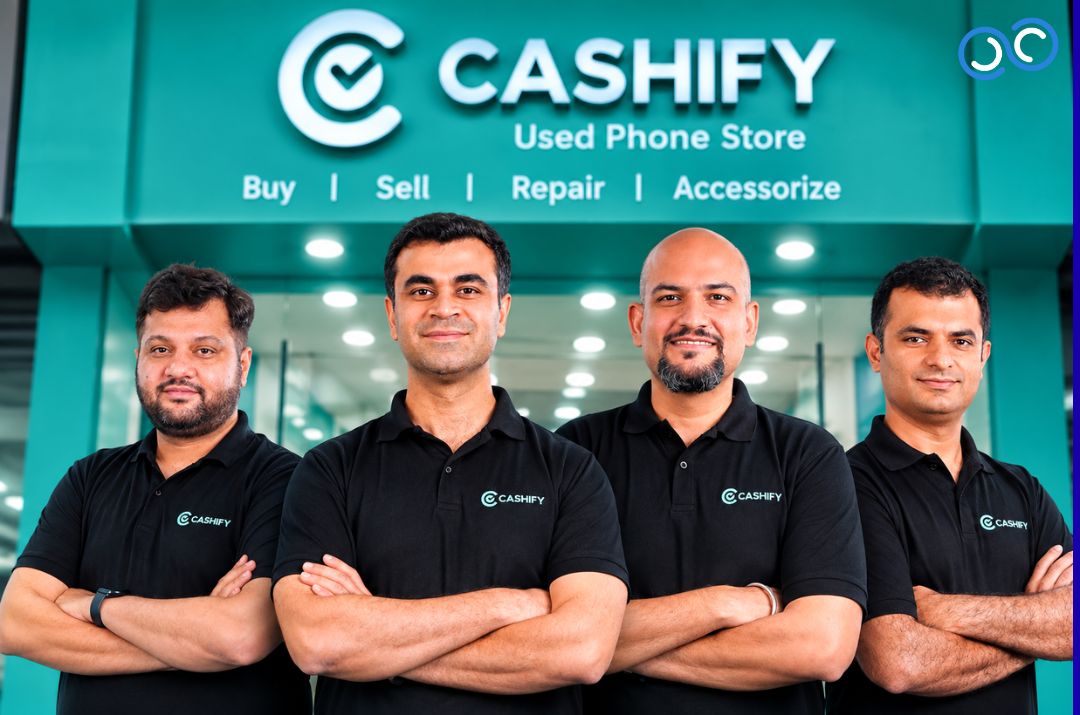
Blume's portfolio demonstrates this broad approach across different business models, including Cashify, Jai Kisan, Stellapps, Procol, Spinny, Battery Smart and Smartstaff.
What Karthik Reddy's Approach Teaches Founders
Karthik Reddy's insights show that early-stage investors are evaluating more than a pitch deck.
They are also evaluating the person behind the startup.
A strong market and product are important, but founders also need the resilience to survive difficult periods, curiosity to keep learning, self-awareness to accept feedback and storytelling ability to bring people behind their vision.
These qualities become especially important at the early stage, when a startup may not yet have enough historical data to prove what it can become.
Summary Takeaway
💡 **Key Takeaway:
- Great founders are not defined only by degrees, funding or impressive pitch decks. Karthik Reddy's approach highlights the less visible qualities that can determine whether a founder survives and scales — hunger, curiosity, resilience, self-awareness, storytelling, persistence and the ability to evolve.

.jpg)
.jpg)
.jpg)
.jpg)

.png)