
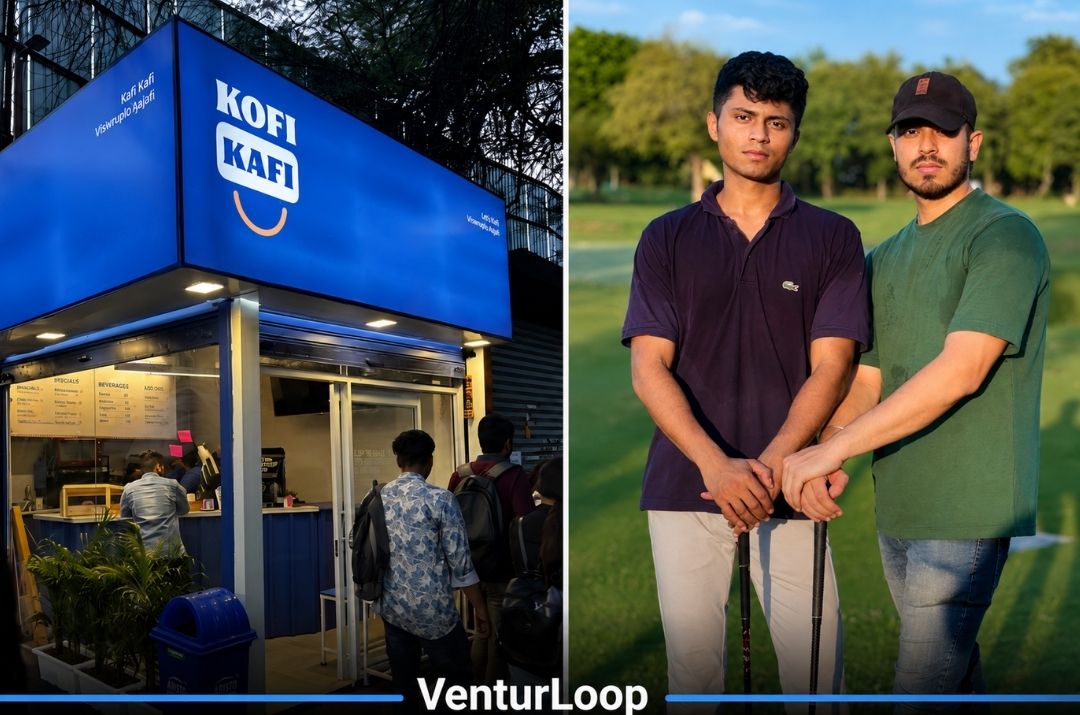

Two childhood friends started Kofi Kafi with just ₹3 lakh and a roadside coffee cart in Rohini, Delhi.
Today, the brand operates five outlets, serves around 1,000–1,500 customers daily, has sold more than 5 lakh cups of coffee, and generates approximately ₹20 lakh in monthly revenue—an annual run rate of around ₹2.4 crore.
The idea was simple
Make good coffee affordable enough for young Indians to drink every day.
Kofi Kafi positioned itself around affordable, freshly brewed coffee rather than expensive café experiences, with its official brand story emphasizing accessibility, youth culture and street-inspired branding.
Key Highlights
Founded by childhood friends Vaibhav Arora and Vansh Mor.
Started in June 2023 with an initial investment of ₹3 lakh.
Began as a customised roadside coffee cart in Rohini, Delhi.
Generated around ₹3–3.5 lakh in sales during its first month.
Expanded from one cart into a five-outlet coffee chain.
Serves approximately 1,000–1,500 customers daily.
Has sold 5 lakh+ cups of coffee.
Generates approximately ₹20 lakh in monthly revenue.
Current annual revenue/run rate is around ₹2.4 crore.
Built its positioning around affordable premium coffee for students and young professionals.
Uses compact, grab-and-go outlets rather than expensive full-scale cafés.
The brand is now expanding across Delhi NCR.
What Makes Kofi Kafi Different?
Kofi Kafi identified a simple gap in India's café market
Young consumers wanted good coffee, but premium café prices made daily consumption difficult.
Instead of building another expensive café, the founders focused on
Affordable Pricing + Quality Coffee + Small Footprint + Youth Culture
Its official website describes the brand as a youth-focused coffee movement built around making premium coffee accessible, with drinks priced under ₹150.
The Business Model
Kofi Kafi uses a lean grab-and-go model with compact outlets and limited seating.
This allows the company to reduce
Real-estate costs
Interior expenses
Staffing requirements
Operational complexity
The model focuses on serving customers quickly while keeping coffee prices accessible. NDTV reported that its outlets are compact, around 150 square feet, and that the company has used this format to maintain affordability.
From Roadside Cart to Coffee Chain
The founders initially couldn't afford commercial espresso machines.
They started with traditional coffee equipment and premium instant coffee.
After proving demand, they opened their first permanent outlet in November 2023 and invested in semi-automatic commercial espresso machines to move toward freshly brewed bean-to-cup coffee.
That progression is important
Start small → Validate demand → Reinvest → Upgrade → Expand
Summary Takeaway
💡 **Key Takeaway:
- You don't always need a huge investment to build a consumer brand. Kofi Kafi started with a ₹3 lakh roadside cart, identified a clear gap between premium coffee and affordable pricing, and used a lean operating model to scale into a five-outlet business generating around ₹2.4 crore annually.

.jpg)
.jpg)
.jpg)
.png)